Your next decade can be an active one
Your 50s are a good time to invest in the abilities you want to keep using: getting out of a chair, carrying what you need, walking with confidence, and enjoying an active weekend. This beginner plan puts those everyday movements at the center. It is appropriate to choose the easier version because you are learning, not simply because you have turned 50.
There is no birthday at which everyone suddenly needs a different workout. A trained 55-year-old may need a much greater challenge than a beginner of 42. Use your experience, symptoms, and recovery to choose the starting point. This sequence offers a foundation that can grow with you, rather than an age-based limit.
A daily rhythm with two strength appointments
Put the strength session on two nonconsecutive days, such as Tuesday and Friday. Allow at least one day before working the same muscles hard again. Walk or choose another enjoyable aerobic activity through the week, adding short, gentle mobility breaks when you have been sitting for a while.
Start with the amount of walking you can manage comfortably. Five or ten minutes counts as a beginning. Gradually work toward the adult goal of 150 minutes of moderate aerobic activity a week; short walks alone may not yet reach it. A third strength day is optional later, with adequate recovery and a schedule you can sustain.
Prepare before you begin
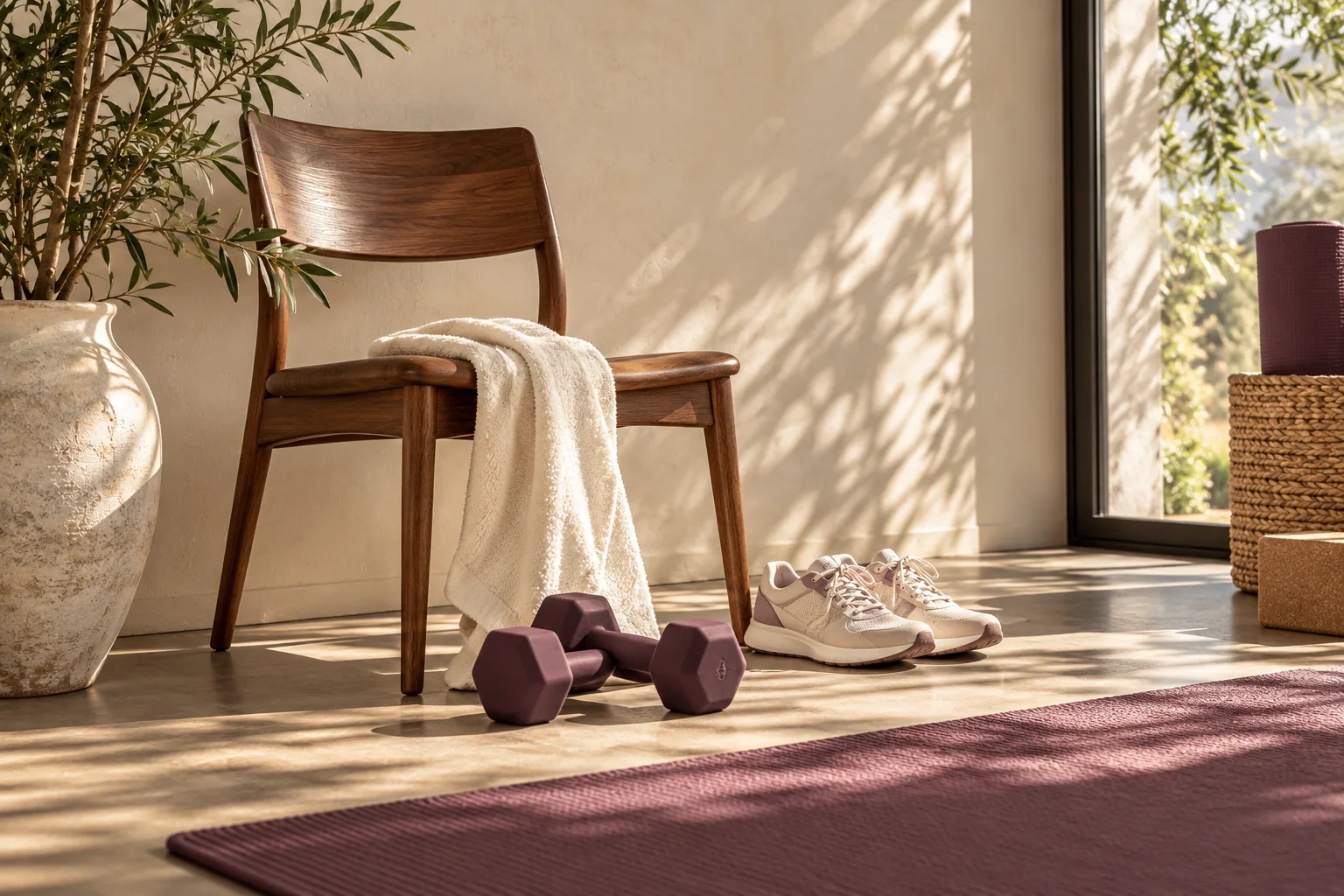
Use a solid chair backed against a wall, a stable counter or bench, and a light weight for the row. Clear the floor, wear supportive footwear, and start with about three minutes of easy walking or marching. Practice the movements without resistance first if they are unfamiliar.
For the first sessions, try one round of five to eight repetitions per strength movement, or fewer if that is your comfortable starting point. Do the row on both sides. Rest about 45–90 seconds between exercises, taking longer when needed. Aim for smooth, deliberate movement and normal breathing rather than speed.
Learn the six movements
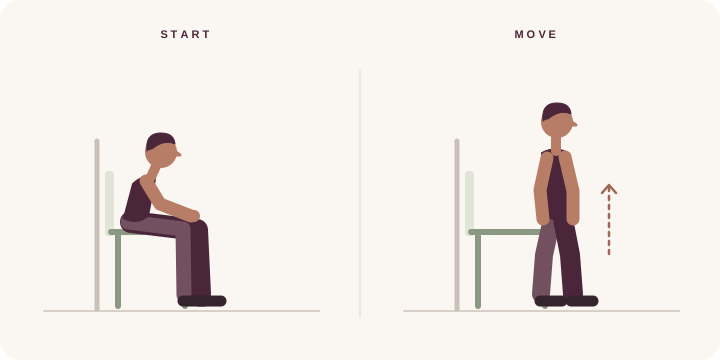
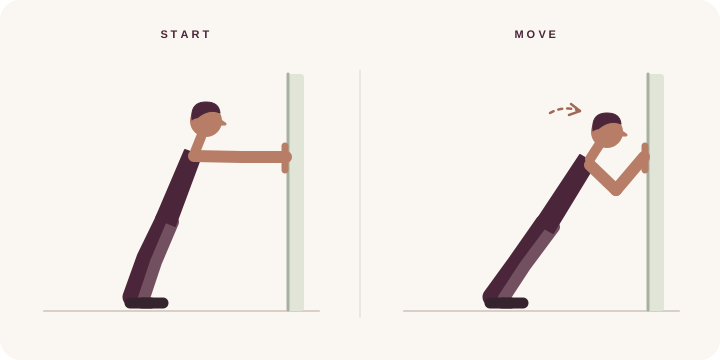
The illustrated circuit combines five strength movements with supported balance practice. For the chair rise, bring your chest forward over your feet before standing, and sit down slowly. For the wall push-up, keep your body aligned as your elbows bend. Moving closer to the wall makes it easier.
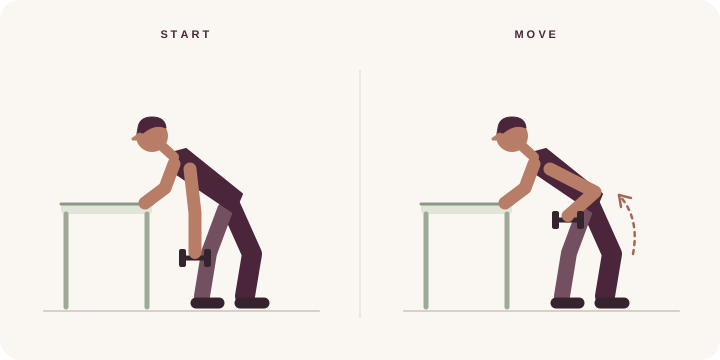
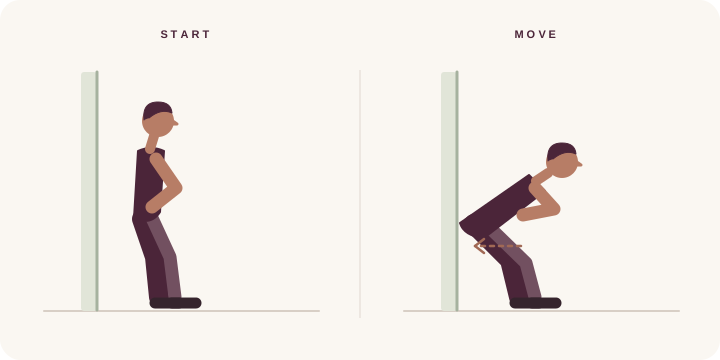
For the row, keep one hand on a stable counter or bench, soften the knees, and lean from the hips. Pull the light weight toward the side of your body without twisting. For the wall hinge, stand a short distance in front of the wall and move your hips backward to touch it, keeping the spine comfortably long. Begin without a weight.
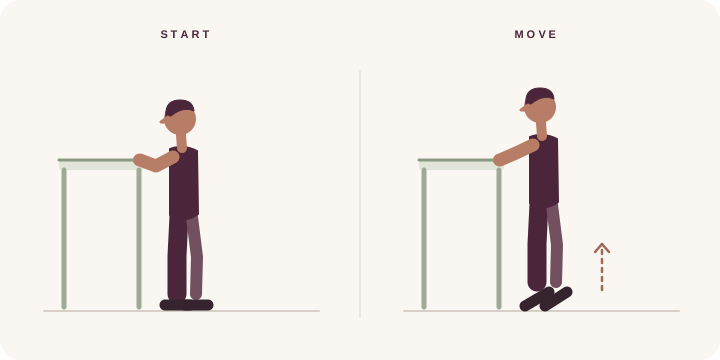
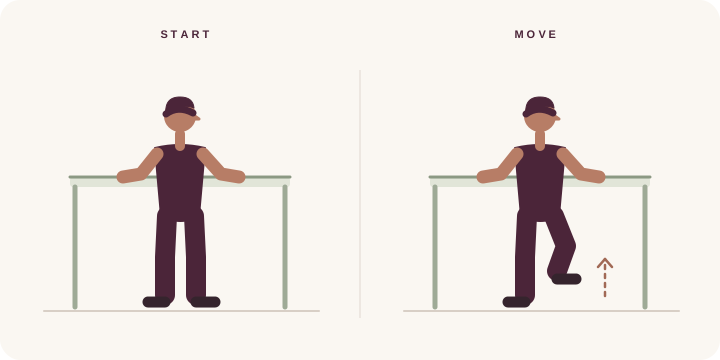
For calf raises, hold the counter, lift both heels, and lower steadily. Finish with supported one-leg balance: keep your eyes open, look ahead, and lift one foot while your fingertips remain on the counter. Try five to ten seconds, up to three times on each side. Support is part of good practice, not a failure.
Make the next step fit your body
Build toward eight to twelve repetitions and two rounds as the movements become familiar. The last repetitions should require effort while your form stays controlled; stop before you have to strain or compensate. Progress one variable at a time. When the current version becomes easy, a little more resistance may be more useful than endlessly adding repetitions.
A higher stable chair or help from the armrests can make the sit-to-stand easier. A lighter weight can make the row more manageable. Keep support close for balance work. The unloaded hinge teaches the movement, but continued strength gains will require an appropriate progression. A qualified trainer or physical therapist can help select the next version.
Track capability and respect symptoms
Once a week, write down something that felt more comfortable: rising from a chair, completing the walk, or keeping your shoulders steady during a row. You do not need to test your limits every day. Recovery, regular meals, and a routine that fits your life belong alongside the exercise itself.
This is general exercise education. If you have osteoporosis with fractures, a recent operation, a painful joint, a heart condition, or significant balance problems, ask for an individual plan. Stop for sharp or worsening pain. Chest pain, fainting, or severe unusual breathlessness need urgent medical attention. Feeling worked and feeling unwell are different signals.
From reading to doing
Three small steps.
Choose your starting level
Use the support and range of movement you need. Your training history matters more than your age.
Practice strength and balance
Complete one comfortable round, then supported balance with eyes open and a stable surface within reach.
Keep a capable-life record
Notice which everyday tasks feel easier. Build repetitions and resistance gradually, with recovery days.
Make room in your weekly ritual ↗The takeawayYour 50s are a reason to make strength and balance a priority, not a reason to assume you are fragile. Begin at your level and keep progressing.