Beauty. Vitality. A life well lived.The Holiday Edit · November 2026
PERFECTBODYBeauty. Vitality. A life well lived.
Established exercise guidance · Beginner editorial routine

Your everyday movement plan for a stronger 40s

Six approachable moves, two strength days, and a daily habit that helps you build momentum without living in the gym.

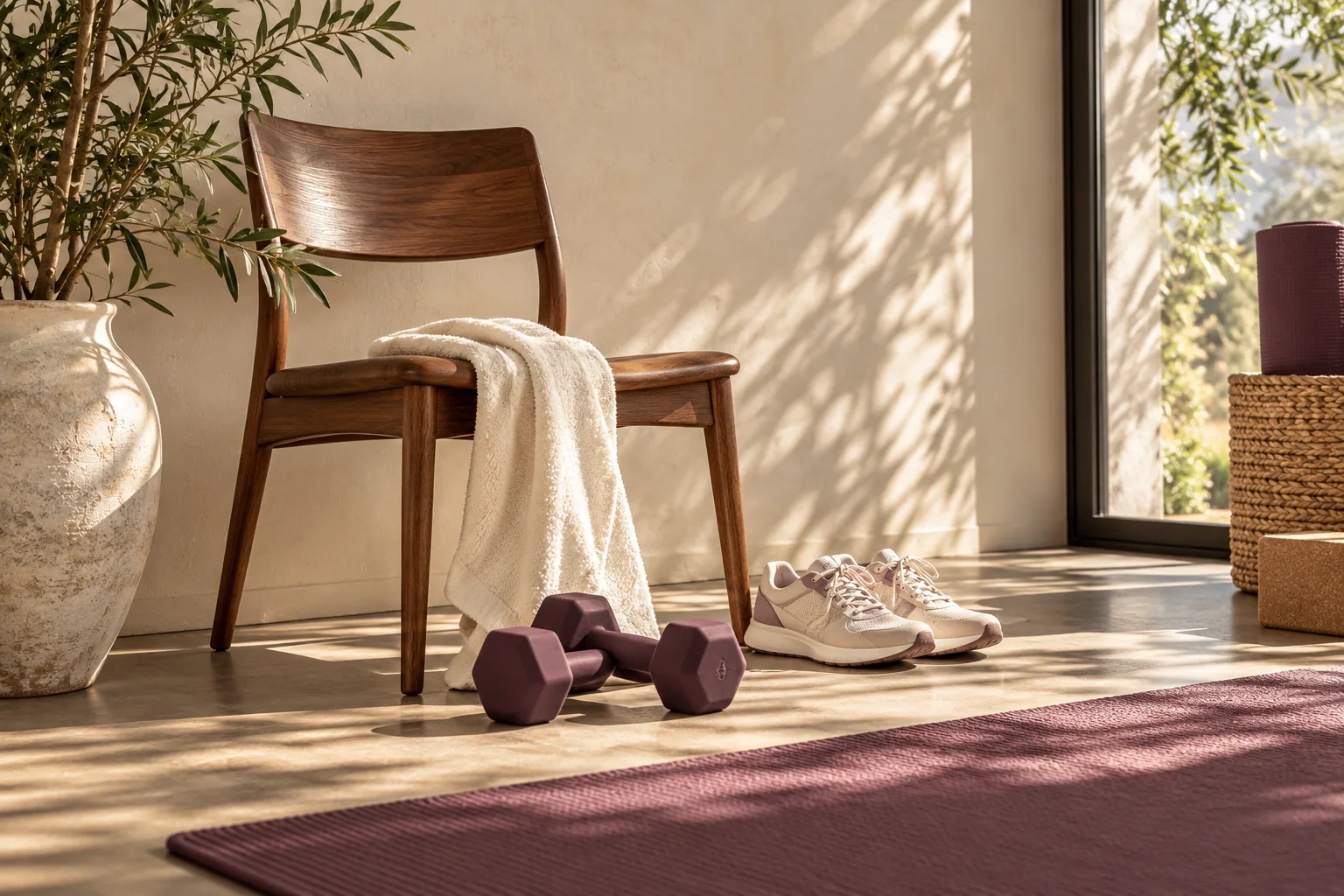
A sturdy chair and light dumbbells in a sunlit home exercise space
AI-created editorial imagery · Illustrative, not a person’s health result
Your illustrated starting routine

Six moves.
A stronger everyday you.

Start with one comfortable round. These are the same useful movement patterns at 40 or 50; choose your challenge by experience, comfort and recovery.

2 daysStrength sessions each week, with recovery between
1 roundBegin with 5–8 smooth repetitions per strength move
45–90 secRest between exercises; take longer when needed
Every dayA little walking or comfortable movement
Before you start

Clear the floor. Use a sturdy chair against a wall, a fixed counter and a light weight. Warm up with about 3 minutes of easy walking or marching. Breathe normally, stay within a comfortable range and leave a couple of good repetitions in reserve. Stop for sharp or worsening pain. Chest pain, fainting or severe unusual breathlessness need urgent medical help. Adapt this starter plan with a clinician or physical therapist if symptoms, an injury or a health condition affect safe exercise.

01
Legs & everyday strength

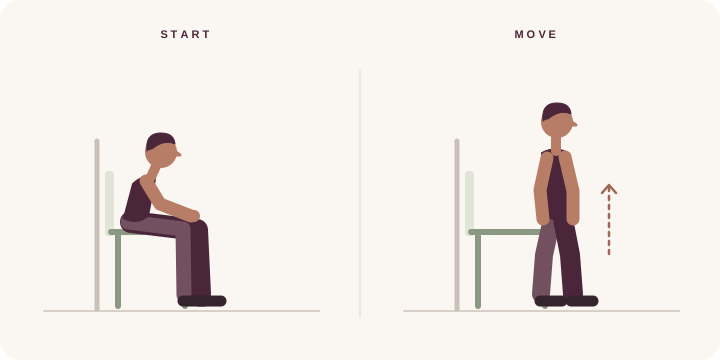
Chair sit-to-stand

5–8 controlled repetitions

Two stages: seated with feet planted beneath the knees, then standing in front of a chair secured against a wall.
  1. Place a sturdy chair against a wall. Sit near the front, with feet about hip-width apart and planted under your knees.
  2. Lean your chest forward from the hips. Press through your feet to stand tall, keeping your knees in line with your feet.
  3. Send your hips back and sit down slowly. Reset before the next repetition.

Make it easier Use your hands on stable armrests or your thighs, or choose a higher stable seat.

Form cue Control the landing. Avoid dropping into the chair.

02
Chest, shoulders & arms

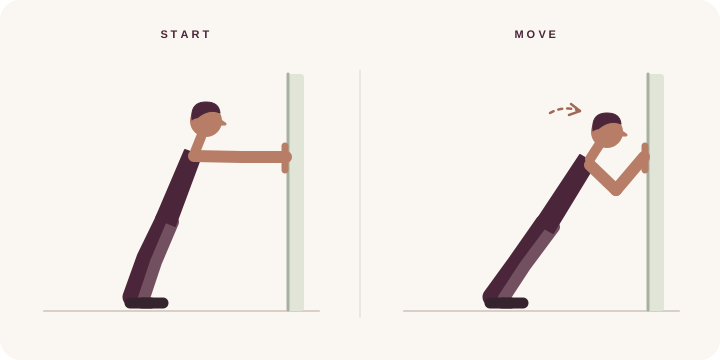
Wall push-up

5–8 controlled repetitions

Two stages: hands on a wall with straight arms and an aligned body, then elbows bent as the body moves toward the wall.
  1. Face a wall with palms around shoulder height and slightly wider than your shoulders. Step back only as far as feels steady.
  2. Keep your body in a long line. Bend your elbows and bring your chest toward the wall, without letting your hips sag.
  3. Press the wall away and return to the start. Keep breathing throughout.

Make it easier Stand closer to the wall and use a smaller comfortable range.

Form cue Move your body as one piece; avoid reaching forward with just your head.

03
Upper back & pulling strength

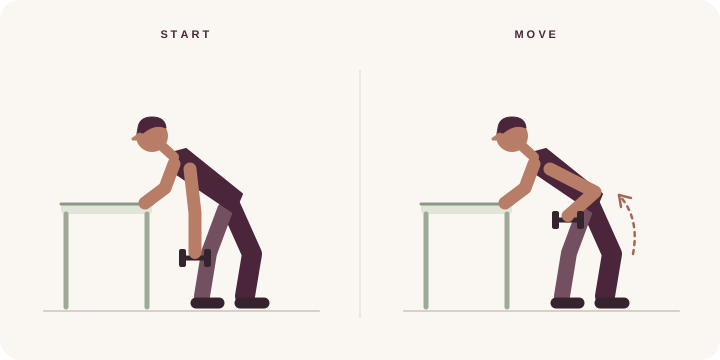
Supported one-arm row

5–8 repetitions on each side

Two stages: one hand rests on a stable table with the other arm holding a light weight down, then the weighted elbow draws back beside the body.
  1. Rest one hand on a stable counter or bench. Soften your knees and hinge at your hips, keeping your back comfortably long.
  2. Hold a light weight in the other hand. Draw that elbow back toward your side without shrugging or twisting.
  3. Lower slowly until the arm hangs comfortably. Complete the repetitions, then switch sides.

Make it easier Use an empty hand or a lighter, securely closed water bottle while learning.

Form cue Keep your torso still. Let the elbow lead rather than swinging the weight.

04
Hip movement & technique

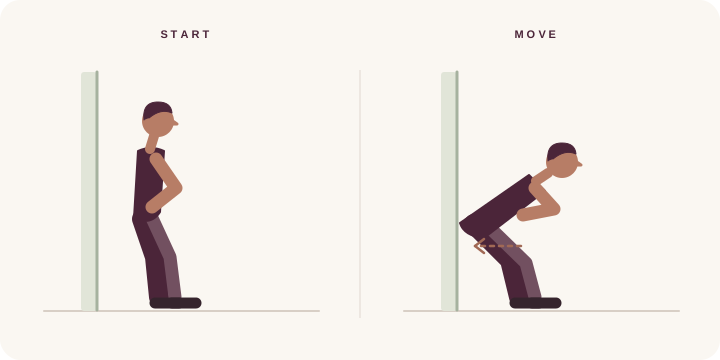
Wall hip hinge

5–8 slow practice repetitions

Two stages: standing a short distance in front of a wall, then sending the hips backward to touch the wall with softly bent knees.
  1. Stand with your back a short distance from a wall, feet about hip-width apart. Keep knees softly bent.
  2. Send your hips backward to gently touch the wall. Your torso tips forward from the hips while your spine stays comfortably long.
  3. Press through your feet to return to standing. Finish tall without leaning backward.

Make it easier Move closer to the wall and make the motion smaller.

Form cue This unloaded version teaches technique. Add resistance later with appropriate instruction.

05
Calves & ankle control

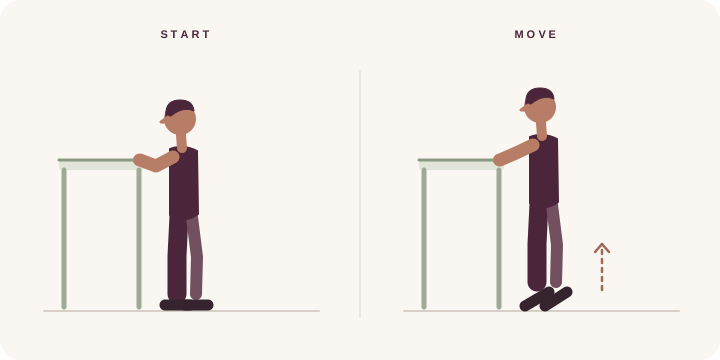
Supported calf raise

5–8 controlled repetitions

Two stages: both hands steady on a counter with feet flat, then heels raised while the balls of the feet remain on the floor.
  1. Stand tall behind a stable counter with feet about hip-width apart. Keep your hands on it for support.
  2. Slowly lift both heels, rising onto the balls of your feet without rolling your ankles outward.
  3. Lower both heels with control. Keep the movement smooth and avoid bouncing.

Make it easier Lift the heels only a little and keep both hands on the counter.

Form cue The counter steadies you. Do not use it to pull your body upward.

06
Balance practice

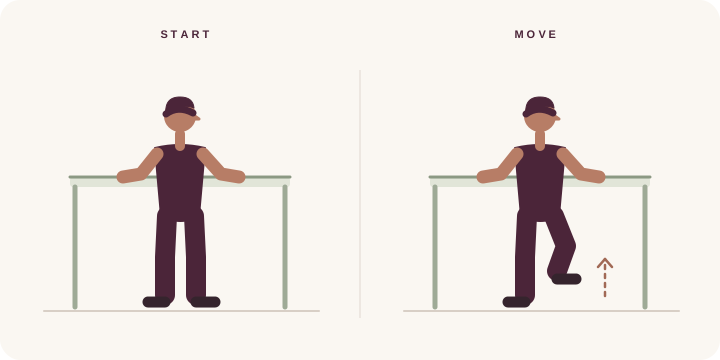
Supported one-leg balance

5–10 seconds · up to 3 times per side

Two stages: both feet on the floor with hands on a stable counter, then one foot lifted a small distance while support remains.
  1. Stand at a fixed counter, with eyes open and your hands or fingertips resting on it. Look straight ahead.
  2. Shift your weight gently to one foot. Lift the other foot just clear of the floor and hold while breathing normally.
  3. Put the foot down before you feel unsteady. Rest and repeat on the other side.

Make it easier Keep the other toes touching the floor and use both hands for support.

Form cue Keep support within reach throughout. Never close your eyes for this beginner version.

Original schematic illustrations show the start and action. They support the written instructions and do not assess your individual form.

An example week · move the days to fit your life

Make strength a date.
Keep movement an everyday habit.

  1. MonStrength

    One starter round + balance. Add an easy walk if comfortable.

  2. TueWalk & move

    Begin with 5–10 comfortable minutes of walking; build from your level.

  3. WedWalk & move

    Begin with 5–10 comfortable minutes of walking; build from your level.

  4. ThuStrength

    One starter round + balance. Add an easy walk if comfortable.

  5. FriWalk & move

    Begin with 5–10 comfortable minutes of walking; build from your level.

  6. SatWalk & move

    Begin with 5–10 comfortable minutes of walking; build from your level.

  7. SunWalk & move

    A comfortable walk or gentle mobility. Let recovery guide you.

Short walks are a starting point. Build gradually toward 150 minutes of moderate aerobic activity per week; 10 minutes every day totals 70 minutes. A moderate pace lets you talk, but makes singing difficult.

When this feels comfortable

Build one step at a time.

  1. LearnOne round, 5–8 controlled repetitions.
  2. BuildWork toward 8–12 repetitions, then two rounds.
  3. ProgressAdd an appropriate challenge when form is steady. Change one variable at a time.

An everyday habit, with room to recover

Feeling stronger can start with a small appointment you keep with yourself. You do not need an elaborate home gym or a punishing seven-day challenge. This plan combines everyday walking and easy mobility with two focused strength sessions each week. It is a general starting routine, not treatment for an injury or a promise of a particular body shape.

Adults are advised to build toward at least 150 minutes of moderate-intensity aerobic activity each week, plus strength work on two or more days. The strength days should challenge all major muscle groups. A ten-minute walk is a useful beginning, but doing it daily adds up to 70 minutes, not the full weekly aerobic target. Build from your own baseline.

Set up a space you will actually use

Choose a clear patch of floor, a wall, a solid chair without wheels, and a stable counter or bench for support. Put the chair against a wall so it cannot slide. A light dumbbell or securely closed water bottle is enough to learn the row. Wear secure footwear and keep pets, loose rugs, and distractions out of the movement area.

Start with about three minutes of comfortable walking or marching. Add a few easy shoulder movements and practice sitting down and standing up. This is preparation, not a race. Have the illustrated sequence visible so you can take your time between movements.

The six-move strength session

Start with one round of the five strength movements below. Use five to eight controlled repetitions while learning; for the row, do that number on each side. Add the supported balance practice at the end. Rest about 45–90 seconds between exercises, or longer until you feel ready. Keep breathing and finish each set while you could still perform another couple of good repetitions.

As the sequence becomes comfortable, work toward eight to twelve repetitions and then two rounds. Choose an effort that feels challenging near the end without making you strain, rush, or change your form. The wall hinge is initially a movement lesson; it will need an appropriate resistance progression to remain a meaningful strength challenge.

  • Chair sit-to-stand: feet planted, lean forward from the hips, stand, and lower to the chair with control.
  • Wall push-up: hands near shoulder height, body in a long line, bend the elbows toward the wall and press away.
  • Supported row: steady one hand on a counter or bench, hinge at the hips, draw the other elbow toward your side, then lower the light weight.
  • Wall hip hinge: with your back a short distance from a wall, soften the knees and send the hips back to touch it; stand tall again.
  • Supported calf raise: hold a stable surface, lift the heels slowly, then lower them without bouncing.
  • Supported one-leg balance: keep fingertips on a counter or wall, lift one foot, hold five to ten seconds, and repeat up to three times per side.

A realistic week

Try strength on Monday and Thursday, leaving at least a day between sessions for the same muscles. Walk on the other days and, if it suits you, on strength days too. Begin with five or ten comfortable minutes and add time gradually. At a moderate walking pace you should be able to talk, though singing would be difficult.

On a busy day, take a short walk and move your shoulders, ankles, and hips gently through a comfortable range. An easy movement break keeps the appointment alive. It does not need to become another demanding strength session. A third strength day can be added later if you are recovering well, with spacing between sessions.

Progress that you can feel

Keep a simple note: exercise, repetitions, and how the last few felt. Once your planned repetitions feel easy with steady form, change one thing: add a repetition, add the second round, or use a slightly heavier weight. Avoid increasing everything at once. A qualified trainer can help you progress the hinge, squat, push, and pull beyond this starter sequence.

Look for practical wins: the shopping bags feel easier, your walk feels smoother, or you trust yourself to begin again after a busy week. Strength supports an active life. Visible changes vary, and a photograph or a scale does not capture everything you are building.

Know when to adapt

Use your hands to assist the chair rise or stand closer to the wall for the push-up if needed. Keep every movement within a comfortable range. Stop an exercise for sharp or worsening pain. Stop and seek urgent medical help for chest pain, fainting, or severe unusual breathlessness.

Get individual guidance if you have symptoms, a recent operation or injury, a condition that affects safe exercise, or uncertainty about the movements. A clinician or physical therapist can adapt the plan. Your starting point and health history matter more than the number on your birthday cake.

From reading to doing

Three small steps.

  1. 01

    Make space

    Set out a stable chair and a light weight. Pick two strength days with recovery between them.

  2. 02

    Learn the sequence

    Begin with one controlled round. Follow the illustrated setup, movement, and easier option.

  3. 03

    Build gradually

    Add repetitions, then a second round, while walking regularly and keeping recovery in the plan.

Make room in your weekly ritual ↗
The takeaway

Move a little every day. Strength-train on two nonconsecutive days, then increase the challenge gradually as your technique and recovery allow.
Sources & further reading

  1. CDC: adult physical activity recommendations ↗
  2. NIDDK: getting active gradually and allowing muscle recovery ↗
  3. HSE: beginner strength exercises ↗
  4. Mayo Clinic: controlled dumbbell row technique ↗
  5. American Diabetes Association: supported balance and wall-touch movements ↗
  6. NHS: strength, flexibility, and gradual progression ↗

This is general education, not a diagnosis or a personal treatment plan. Discuss medical treatments, supplements and changes relevant to your health with a qualified clinician. Research and regulatory guidance can change. How we work.

Keep exploring.

All stories ↗