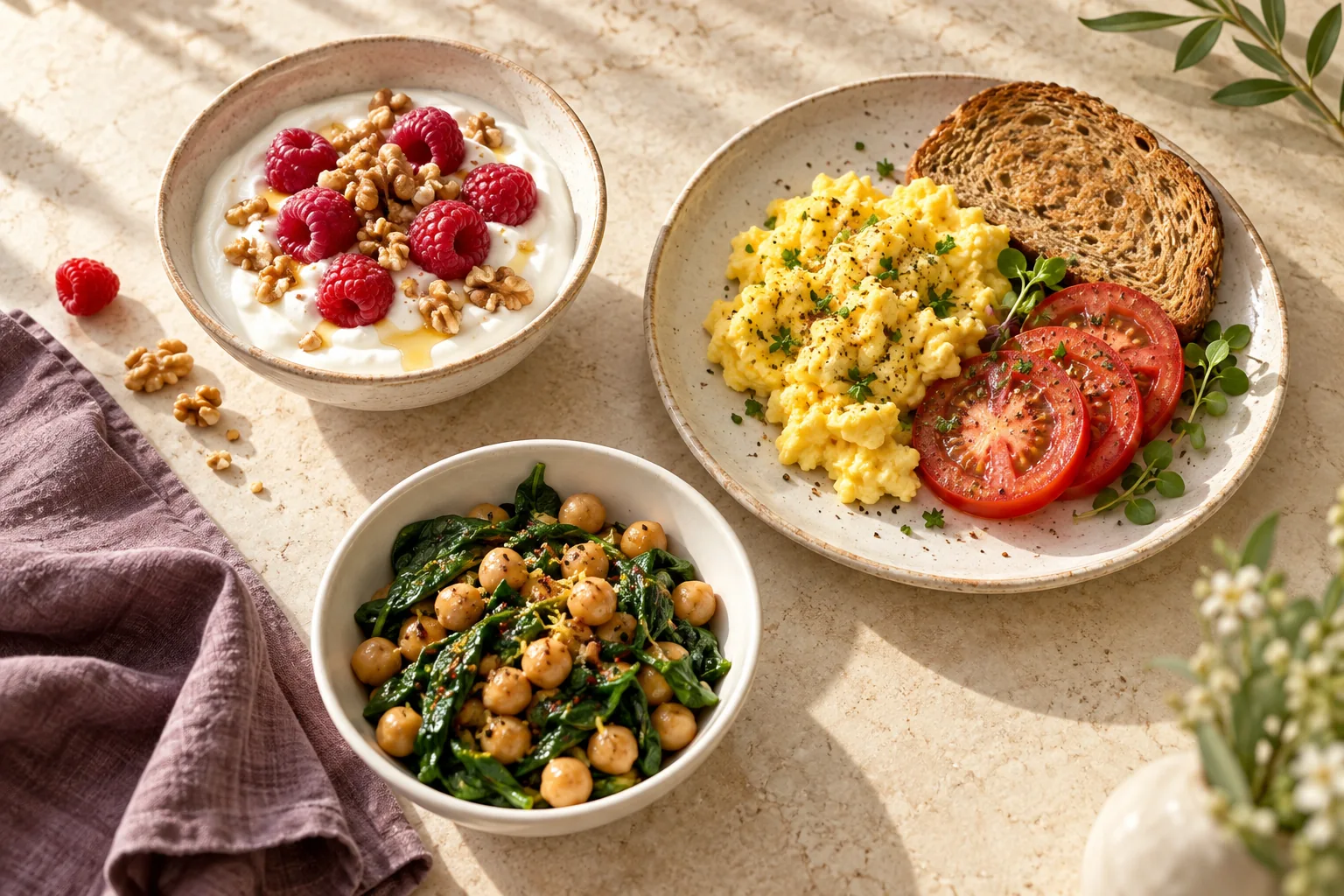
A better breakfast, beautifully simple.
Three satisfying breakfast ideas built around everyday protein foods, colorful produce, and practical preparation.
Read the story ↗An approachable guide to nutrient density, satisfying meals and choosing food for the life you want to live.
If you want to make every calorie count, begin by asking what your food brings to the day: energy, protein, fiber, vitamins, minerals, pleasure or a moment of connection. Calories describe energy. They do not tell the whole story of a meal, and the lowest-calorie choice is not automatically the one that best meets your needs.
Nutrient density means getting useful nutrients in relation to the energy a food provides. NIDDK highlights this idea in guidance for older adults, whose needs can change with age. That does not mean every person over 40 should eat less. Appetite, activity, health, medications and life stage all matter. This guide offers meal-building ideas, not an individual calorie prescription.
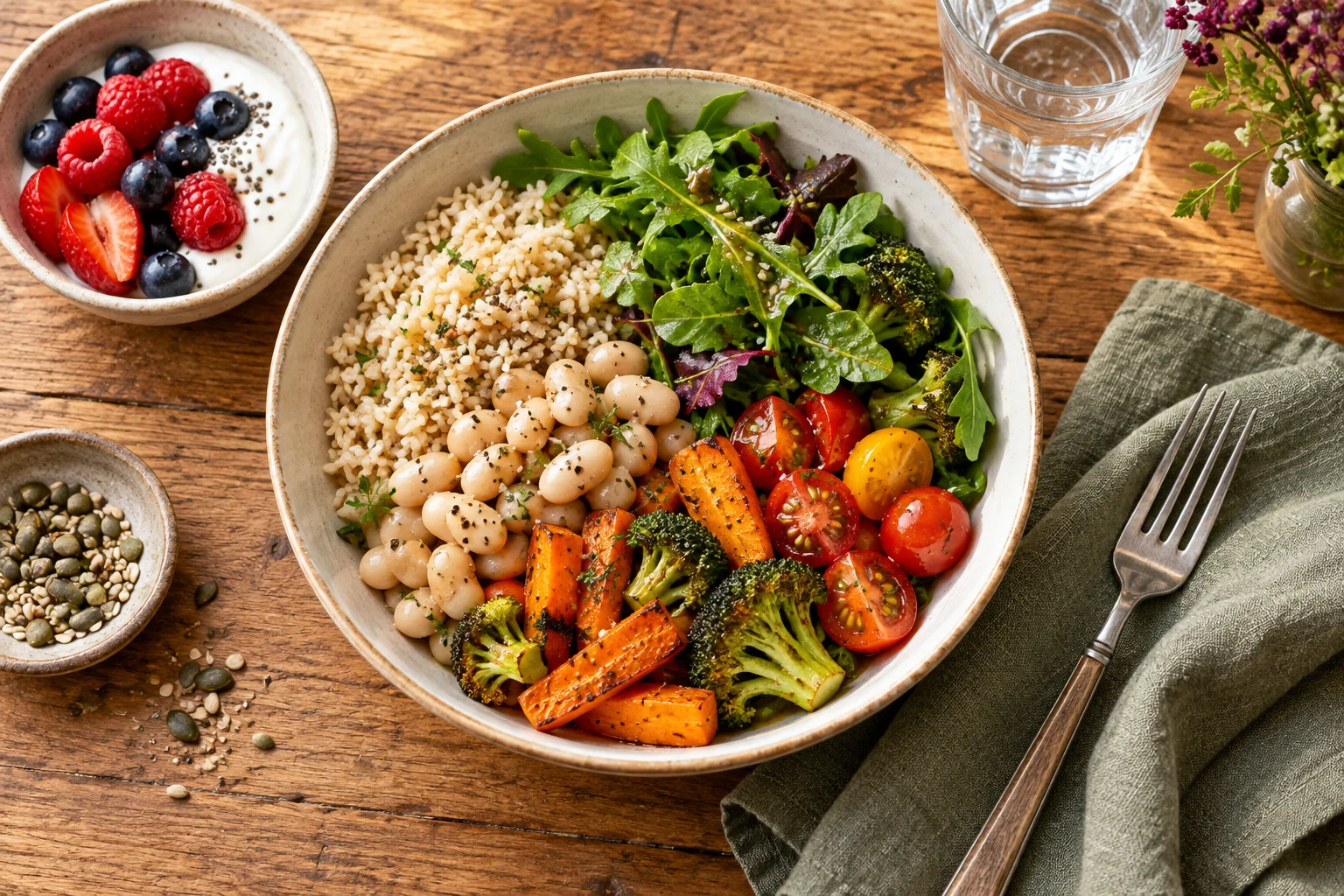
A flexible meal can start with a protein food, vegetables or fruit, a fiber-containing carbohydrate and a fat or flavor you enjoy. Some foods do more than one job: beans provide protein and fiber, for example. You do not need four separate dishes or a shopping cart of special products. Use what is affordable, culturally familiar and practical.
Think of a bowl of beans, rice, roasted vegetables and olive-oil dressing; an egg sandwich with fruit; or salmon, potatoes and greens. These are examples, not required combinations. Adjust portions to your appetite and needs, and include food that makes the meal satisfying. A thoughtfully assembled dinner can still finish with a favorite dessert.
Look at a meal you already make and ask what could round it out. Add chickpeas and chopped vegetables to a pasta salad. Put fruit and plain yogurt next to a pastry. Serve leftover roast vegetables with a sandwich. A bag of frozen vegetables or a can of beans can be a more useful purchase than a complicated new diet plan.
The National Institute on Aging describes variety across vegetables, fruit, grains, protein foods and dairy or appropriate fortified alternatives as part of healthy eating. Its guidance also highlights protein foods and nutrients such as calcium, vitamin D and vitamin B12 in later life. Supplements may sometimes be appropriate, but needs should be discussed with a clinician rather than inferred from a birthday or a social-media list.
If two foods both fit your budget and taste, use the label to answer a specific question. Are you looking for more fiber, less sodium, an allergen-free option or a fortified dairy alternative? Compare similar serving sizes. A package’s front-of-pack promise does not establish whether it suits your whole meal, and a product labeled “natural” still needs the same practical assessment.
Take plant-based drinks as an example: protein and fortification vary. Read the nutrition and ingredient information rather than assuming every oat, almond or soy drink is interchangeable with milk. For a snack, think about the situation too. A piece of fruit may be enough on one occasion; fruit with a sandwich or yogurt may suit a longer gap before your next meal.
Choose two breakfasts, two quick lunches and one flexible dinner you can repeat. Repetition can be useful when the calendar is full. Shop for ingredients that appear more than once: yogurt for breakfast and a dip, beans for a salad and a soup, or vegetables that work roasted, raw or frozen. Keep a backup meal for the night you arrive home tired.
A practical holiday week might include oats with yogurt and fruit, a turkey or hummus sandwich, bean soup with bread, and a tray of roasted vegetables alongside a familiar main. Use prepared components when they help. Food accessibility, chewing or swallowing difficulties, digestive symptoms and food insecurity all deserve support; a nutrition plan is only useful if you can actually follow it.
At the end of the week, notice whether meals were easier to arrange, whether you had enough to eat, and whether the foods felt satisfying. You can make one adjustment without judging the whole week. Perhaps breakfast needs a more substantial option, or an afternoon snack would make the late dinner easier.
If tracking calories increases anxiety, guilt or food preoccupation, a meal-building approach may be more comfortable. A registered dietitian can help with personal goals, especially if you have a condition that changes nutrient needs. Good nourishment should help you participate in life: showing up for a walk, enjoying your family, concentrating on work and having the energy to do something you love.
Choose something you already enjoy and can reliably prepare or buy.
Consider a protein food, fruit or vegetable, fiber source or appropriate fortified food.
Use labels for your actual need, such as fiber, sodium, allergens or fortification.
Notice satisfaction and practicality, then make one manageable adjustment.
Original illustrations support the steps above. Adapt each idea to your needs.
Choose a satisfying variety of foods that meet your needs and make everyday living easier; there is no universal calorie target for your age.
This is general education, not a diagnosis or a personal treatment plan. Discuss medical treatments, supplements and changes relevant to your health with a qualified clinician. Research and regulatory guidance can change. How we work.
Three satisfying breakfast ideas built around everyday protein foods, colorful produce, and practical preparation.
Read the story ↗
Compare popular eating patterns by their evidence, everyday meals, and practical tradeoffs—without turning every bite into a rule.
Read the story ↗
Before you add another capsule, get clear on the purpose, the evidence, and the product behind the promise.
Read the story ↗