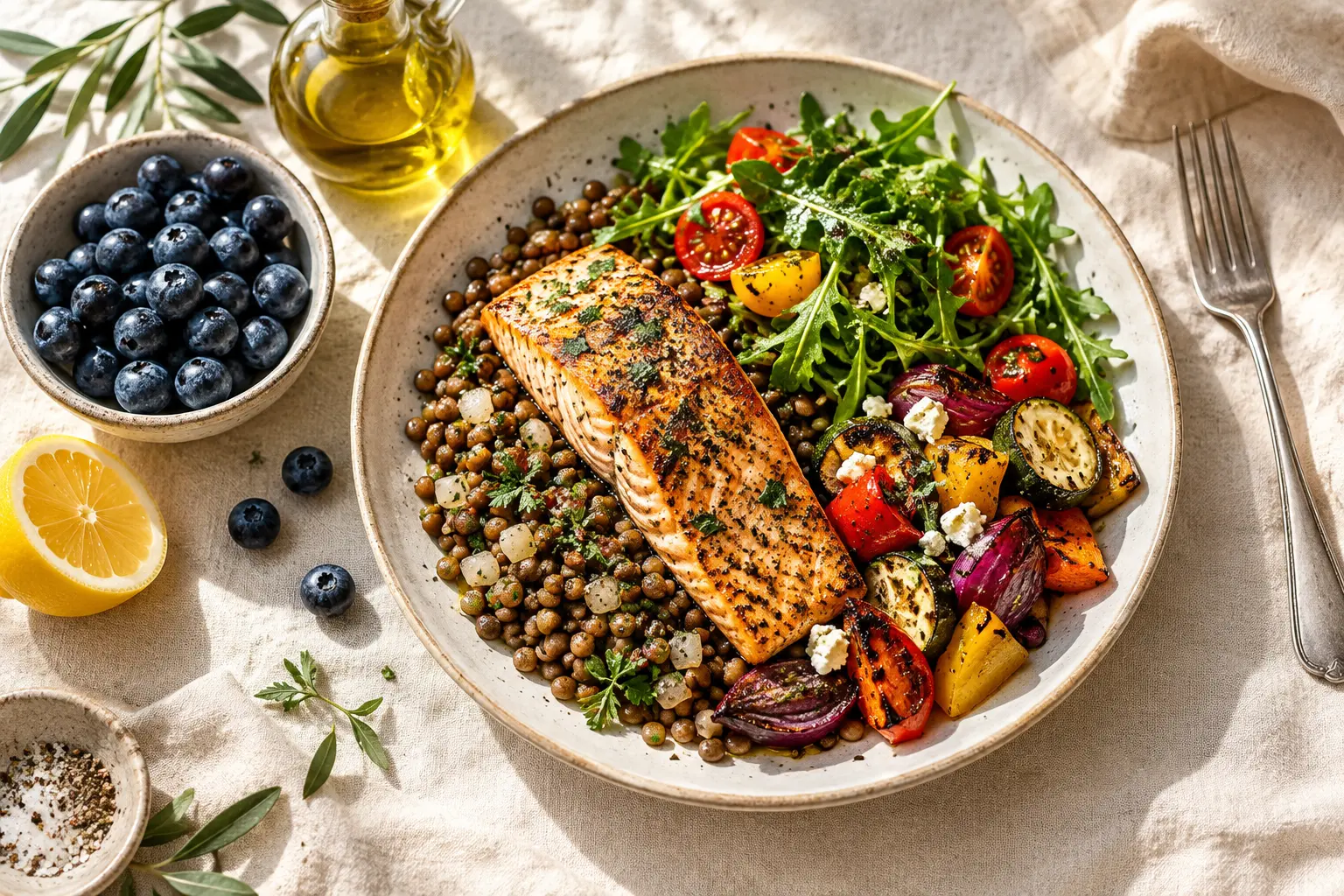
Eat for the long game.
An inviting approach to nourishment: colorful meals, satisfying protein, and a routine that fits real life.
Read the story ↗Three satisfying breakfast ideas built around everyday protein foods, colorful produce, and practical preparation.
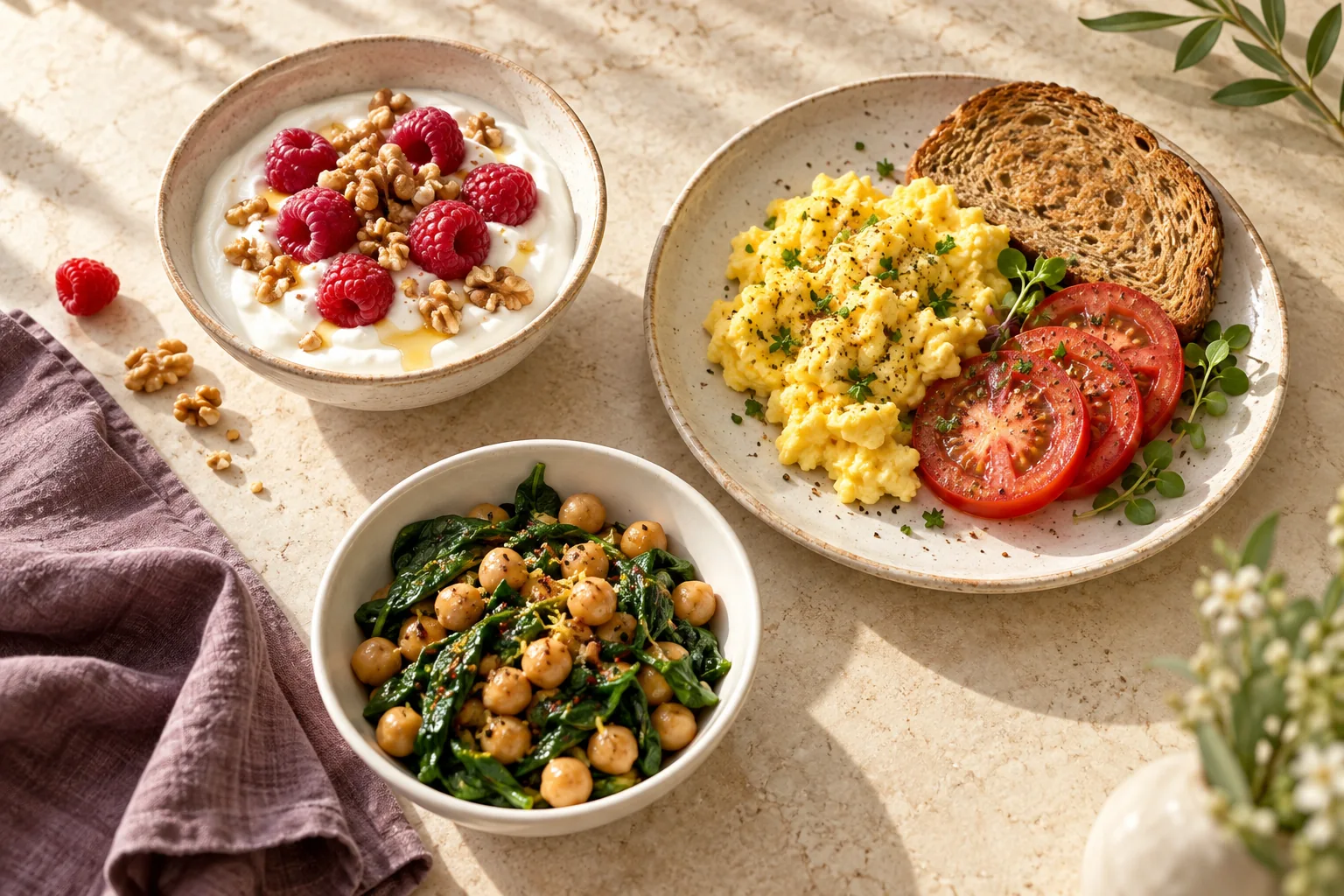
A useful breakfast is one you enjoy enough to make again. It might be cool and creamy, warm and savory, or packed into a container before the house wakes up. Give it an identifiable protein food, add produce, and include a whole-grain option when it suits the meal. Then let flavor and convenience do some of the work.
CDC includes eggs, beans, soy foods, and other protein sources within a varied eating pattern. There is no single breakfast or universal protein target in this guide. These are flexible food ideas; adjust ingredients and portions to your appetite, preferences, allergies, and any individualized dietary advice.
Spoon plain Greek yogurt into a bowl and add berries, oats, and a little crunch from chopped nuts or seeds if you tolerate them. Cinnamon or citrus zest makes the bowl feel considered without adding much work. Keep the toppings separate until you are ready to eat if you prefer a crisp texture.
For a dairy-free version, choose an unsweetened soy yogurt or another option that suits you, checking the label for protein and fortification rather than assuming all alternatives are equivalent. Frozen berries are a convenient backup. This is an assembly idea, so use the fruit and texture you actually look forward to.
Cook eggs with spinach and tomatoes, then serve with whole-grain toast. Fresh herbs, black pepper, or a spoonful of salsa can change the character of the plate. Add fruit alongside if you like a sweet finish. The aim is a complete, enjoyable meal rather than an exercise in stripping breakfast down.
Make the preparation fit the morning you have. Wash vegetables or set out the pan ahead of time; use vegetables left from another meal when they have been stored safely. Eggs provide the protein focus here, while the toast and produce bring variety. There is no need to turn it into a stack of specialty ingredients.
For a plant-based savory option, crumble firm tofu into a pan with peppers and a little olive oil. Add cooked black beans, warm through, and season with cumin or your favorite herbs. Serve with a whole-grain tortilla and tomatoes or another vegetable you enjoy. Tofu and beans make the protein foods visible rather than leaving them as an afterthought.
Keep this adaptable: use chickpeas instead of black beans, or swap peppers for a vegetable already in the refrigerator. Check labels for allergens and choose foods that fit your needs. A bowl can also work as a later first meal; the ingredients do not require a particular clock time.
Use packaged-food labels as a comparison tool. FDA explains that nutrient amounts refer to the listed serving, and that serving size describes typical consumption rather than prescribing your portion. Added sugars are listed separately from the sugars naturally present in foods such as milk and fruit. Consider the whole food and meal, not one number alone.
Start with yogurt, eggs, tofu, beans, or another option you enjoy.
Bring in fruit or vegetables and a whole-grain accompaniment that fits the meal.
Make a small part of tomorrow's breakfast easier before the morning begins.
Choose a protein food you enjoy, add variety, and make the preparation fit your morning. A useful breakfast can be simple.
This is general education, not a diagnosis or a personal treatment plan. Discuss medical treatments, supplements and changes relevant to your health with a qualified clinician. Research and regulatory guidance can change. How we work.
An inviting approach to nourishment: colorful meals, satisfying protein, and a routine that fits real life.
Read the story ↗Before you add another capsule, get clear on the purpose, the evidence, and the product behind the promise.
Read the story ↗
A practical look at movement, nourishment, and the bone-health conversation worth having around menopause.
Read the story ↗