
A body built for living.
A fresh definition of optimization: more strength, more possibility, and more life in your years.
Read the story ↗An inviting approach to nourishment: colorful meals, satisfying protein, and a routine that fits real life.
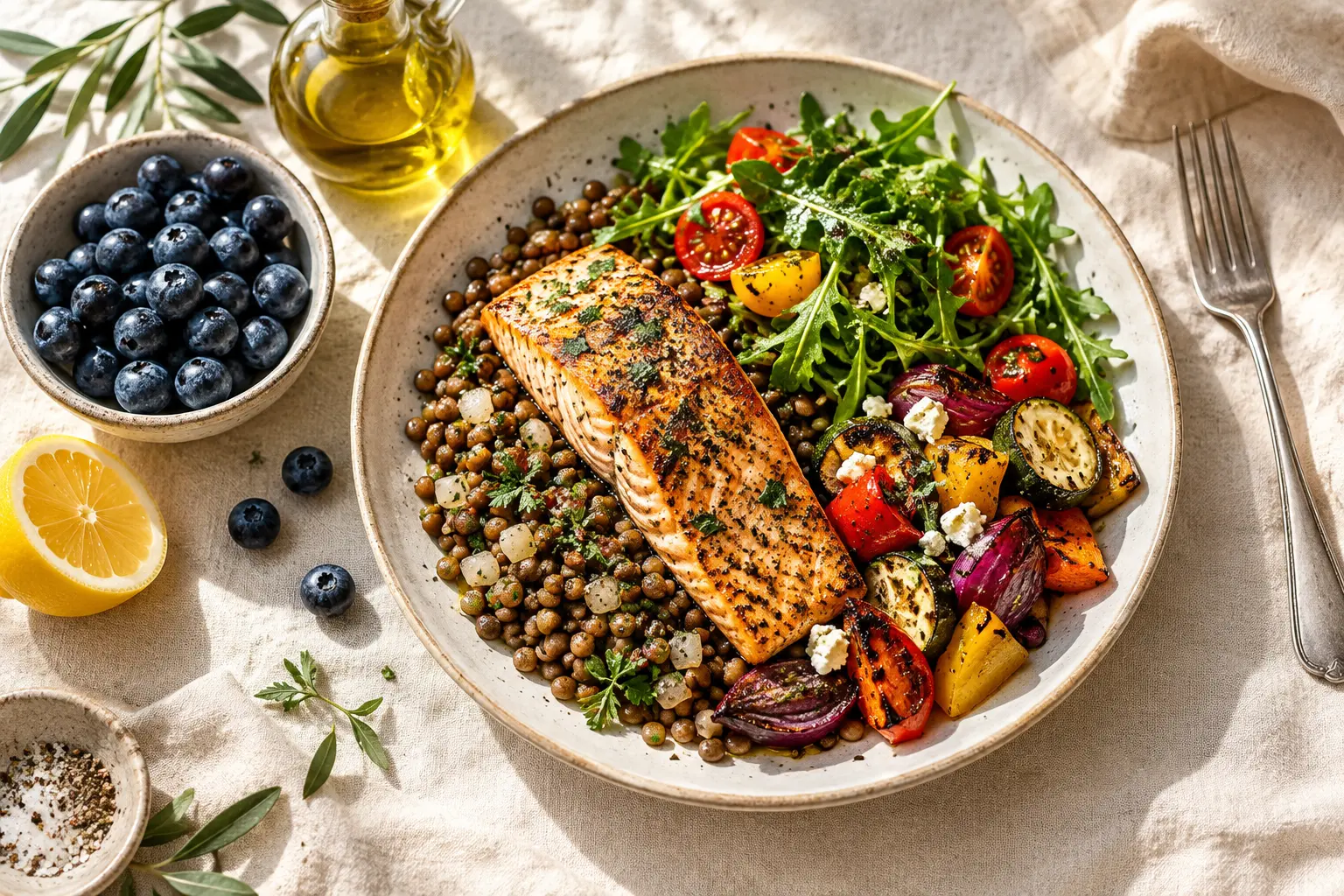
The most photogenic smoothie is not necessarily the breakfast you want on an ordinary Tuesday. A useful food routine works when you are busy, when the refrigerator looks uninspiring, and when dinner needs to happen without a new shopping list.
Start with meals you already like. Think about what would make them more varied, satisfying, and convenient. A good approach leaves room for culture, budget, celebrations, and the pleasure of sharing a table. You do not need to earn your food through exercise or make every plate identical.
The American Heart Association offers a simple visual starting point: vegetables and fruit for roughly half the plate, with whole grains and lean protein sharing the rest. Beans and fish are useful protein options; frozen produce and quick-cooking grains can make preparation easier.
Harvard's Healthy Eating Plate explains that these proportions are a guide, not a prescription for calories or serving sizes. The idea can work in a soup, bowl, or packed lunch. Individual needs differ, so a diagram is a starting point for choices rather than a measure of whether you ate correctly.
Try building a short list of meals you enjoy enough to repeat. For example, a bowl might combine lentils, a grain you like, roasted vegetables, and a dressing. Another day might involve fish, rice, and a salad. These are meal ideas, not a personalized nutrition plan.
Keep the practical question in view: what will make eating well easier this week? That might mean washing produce ahead, stocking a freezer option, or preparing one ingredient that works across several meals. Convenience can be part of care.
CDC describes healthy eating as a consistent pattern that can reflect personal preferences and budget. Variety matters, and a single ingredient does not turn a whole diet into a longevity treatment. Be curious about claims that make one food sound essential or dangerous for everyone.
If you have a condition that changes your dietary needs, a history of disordered eating, or unexplained appetite or weight changes, seek individual guidance. A registered dietitian can help turn broad principles into a plan that suits your circumstances.
Build a way of eating you can enjoy and repeat. Variety and practicality belong at the same table.
This is general education, not a diagnosis or a personal treatment plan. Discuss medical treatments, supplements and changes relevant to your health with a qualified clinician. Research and regulatory guidance can change. How we work.
A fresh definition of optimization: more strength, more possibility, and more life in your years.
Read the story ↗
Think beyond the mirror. Build the capacity for stairs, travel, play, and everyday independence.
Read the story ↗Before you add another capsule, get clear on the purpose, the evidence, and the product behind the promise.
Read the story ↗