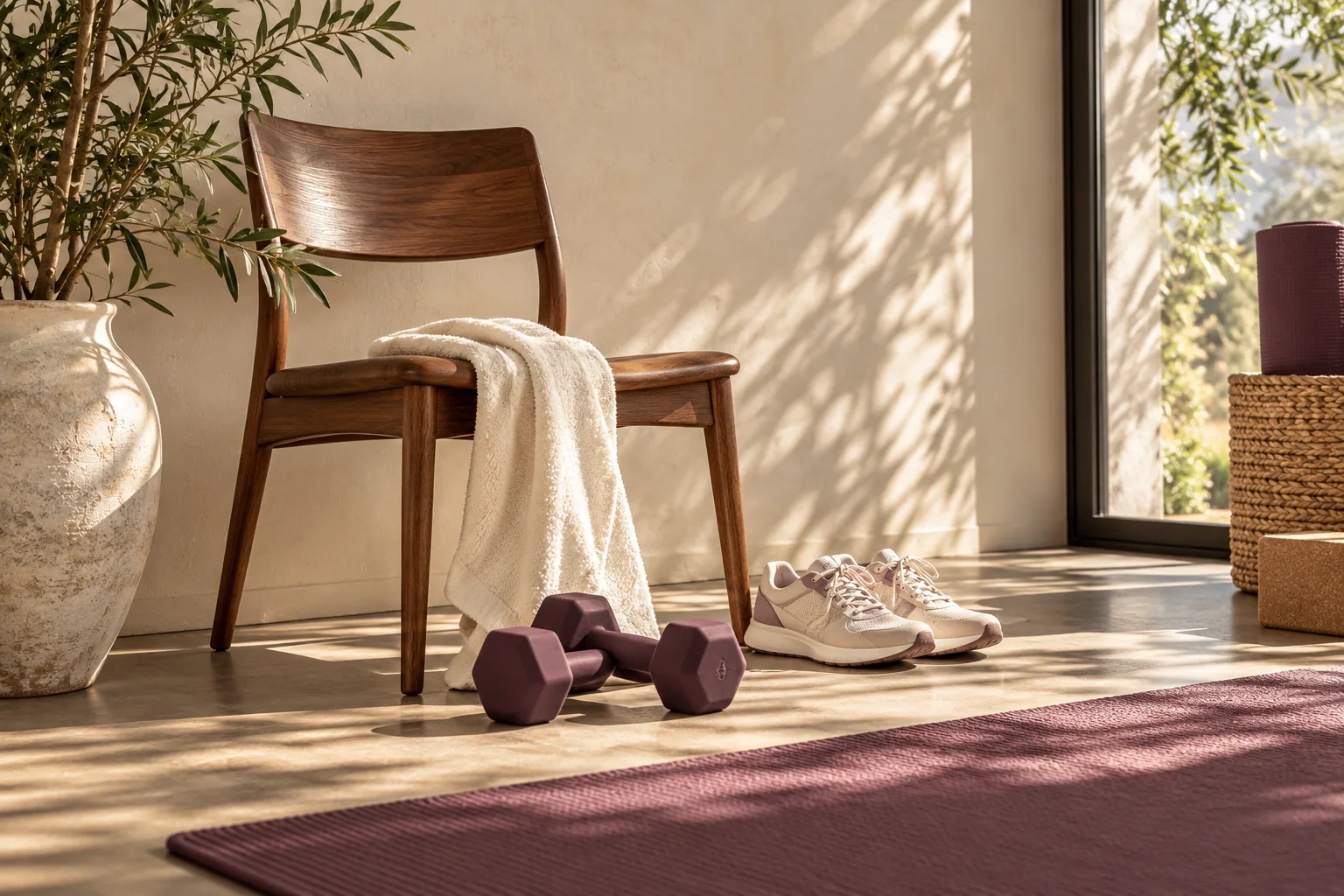
Your everyday movement plan for a stronger 40s
Six approachable moves, two strength days, and a daily habit that helps you build momentum without living in the gym.
Read the story ↗A flexible week of strength, walking and recovery that leaves room for celebrations, travel and being a beginner.

Imagine arriving at a celebration with a little more energy, carrying your overnight bag comfortably, or enjoying a walk with people you love. Those are useful holiday fitness goals. Start with one sentence: By the end of this month, I would like everyday life to feel easier when I ____. Give your plan a purpose that belongs to you.
You can begin in the body you have today. The holiday calendar does not set a deadline for changing your appearance. A plan that survives a busy Tuesday is more useful than one that depends on four completely free weeks.
Use strength, walking and recovery as your anchors. CDC recommends at least 150 minutes of moderate aerobic activity weekly and muscle strengthening on two days for adults. That is a general destination; beginners can start with less and build gradually. Short periods of activity count, and your starting ability matters more than your age label.
Here is an adaptable example week. The strength sessions should use a routine you can perform comfortably and correctly. Choose our illustrated 40s or 50s guide for setup, easier options and progression, or work with a qualified trainer or physical therapist.
You do not need a crowded equipment list. A stable chair, a clear space and an appropriately light weight can support an introduction to strength work. Learn controlled movements before making them harder. A session should leave you able to move through the rest of your day; sharp pain is a reason to stop and reassess.
Keep a note of what you did and how you felt afterward. If a movement is consistently uncomfortable, seek an adjustment instead of repeatedly forcing it. An experienced professional can help with balance limitations, joint problems or returning after an injury. Recovery is part of the appointment.
Choose a route that starts close to where you already are. A short loop before errands, a daylight stroll with a friend or an indoor walk during bad weather can all make movement easier to repeat. At a moderate pace, you should generally be able to talk but not sing. An easy walk can still be a useful starting point.
Try making the first outing a scouting trip: check the surface, crossings, shade and places to rest. The next walk will require one less decision. For a gradual schedule, use our four-week walking plan and repeat a week whenever you need more time.
Before a trip, identify one safe place to walk and one realistic time to move. Put comfortable shoes where you can reach them. Ask your host whether there is a pleasant route nearby, or check whether your hotel has an accessible indoor option.
Give yourself a fallback: five comfortable minutes, a shorter familiar routine, or simply returning to your usual plan tomorrow. Avoid trying to make up missed sessions by stacking hard workouts together. A disrupted day is information about your schedule, not a verdict on your commitment.
Regular meals, enough sleep and manageable expectations help make the week workable. Eat in a way that supports your activities and enjoyment of the season. Exercise is a way to care for yourself; holiday food does not create a debt that a workout has to repay.
If you have a condition that affects exercise, are recovering from illness or surgery, or are unsure what is appropriate, discuss your starting plan with your health professional. Pause for concerning symptoms. Start at a level that allows you to return with confidence.
At the end of the week, ask: Did I follow through more often? Did I enjoy a walk? Is a familiar task feeling easier? What would make next week simpler? Record one useful observation, then change one thing. You are building a routine that can accompany you into January and beyond.
Choose one everyday moment you want to meet with more energy, strength or confidence.
Choose two suitable strength days with recovery between them and a few realistic walking opportunities.
Decide what you can comfortably do when travel, family or a busy day changes the plan.
Notice consistency, comfort and everyday capability, then choose one manageable adjustment.
Original illustrations support the steps above. Adapt each idea to your needs.
Build a holiday routine around useful strength, enjoyable movement and recovery. Begin where you are and leave room for real life.
This is general education, not a diagnosis or a personal treatment plan. Discuss medical treatments, supplements and changes relevant to your health with a qualified clinician. Research and regulatory guidance can change. How we work.
Six approachable moves, two strength days, and a daily habit that helps you build momentum without living in the gym.
Read the story ↗
Build a routine around stronger legs, a capable upper body, and steadier balance—with options that meet you where you are.
Read the story ↗
Start gently, build at your own pace and use walking to support stress relief, fitness and weight management without chasing a perfect step count.
Read the story ↗