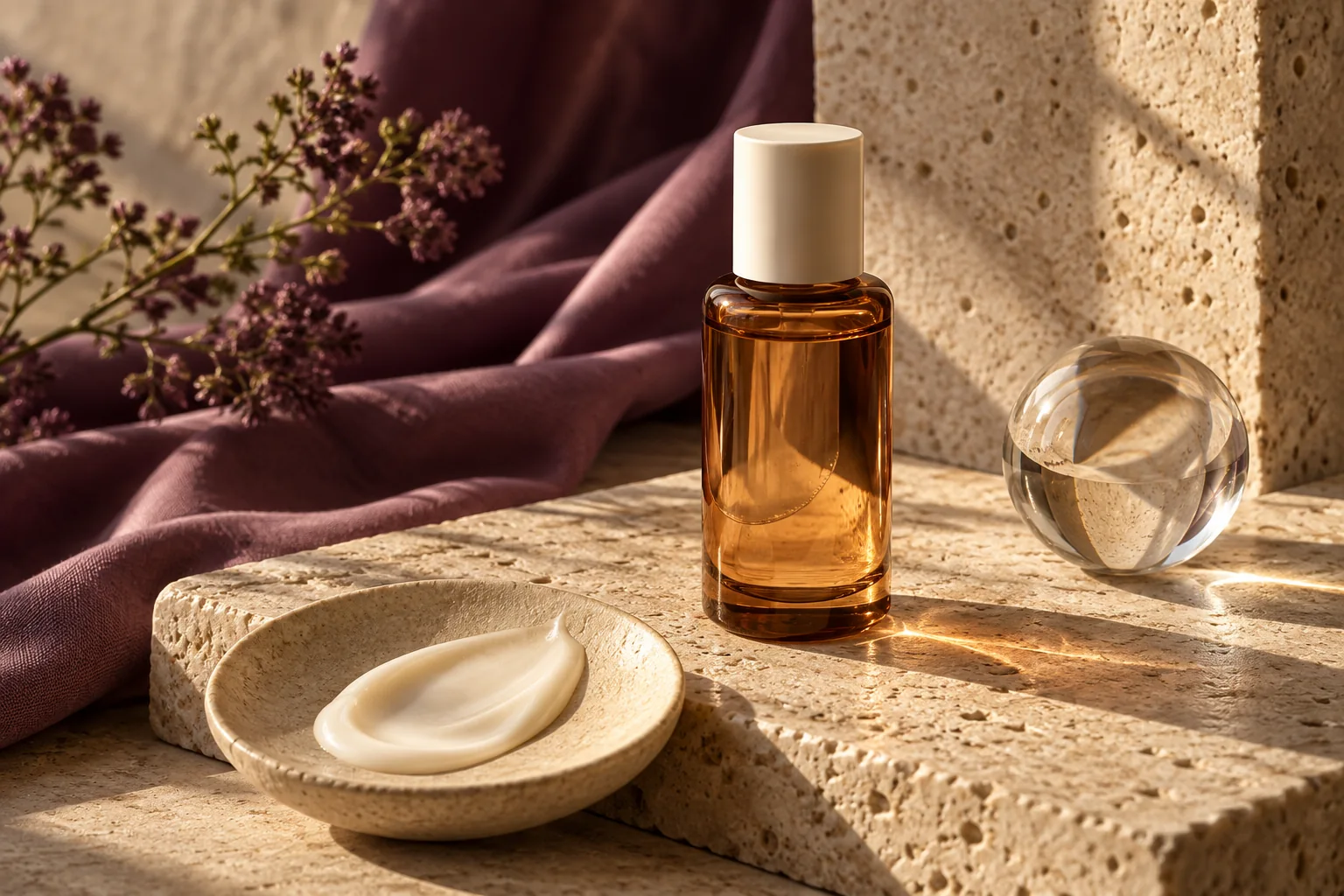
Retinol, with a little perspective.
A thoughtful introduction to vitamin A skincare: what the names mean, what to expect, and why comfort matters.
Read the story ↗When your routine feels like too much, return to the essentials that help skin stay comfortable.

Skin is an active organ, not a surface waiting to be perfected. NIH describes its roles in keeping fluid inside the body, defending against the outside world, regulating temperature, and sensing touch. The outer layer is part of that protective system. Caring for it can be wonderfully ordinary.
The phrase skin barrier has become a selling point for everything from cleansers to elaborate serum collections. Before adding a new collection, look at the routine you already have. Which products feel comfortable? Which are there because you thought a complete routine was supposed to contain them?
The American Academy of Dermatology suggests a simple foundation: cleansing, moisturizing, and protecting skin from the sun. Products do not have to be expensive to perform these jobs. Using numerous products can increase irritation as well as cost.
Think of this as a way to organize your shelf, not a universal prescription. A prescribed treatment has its own purpose and instructions. Keep it in the conversation with your clinician rather than stopping it to follow a social-media reset. Your routine may need tailoring for acne, eczema, rosacea, or another skin condition.
AAD's dry-skin guidance favors gentle, fragrance-free products and notes that unscented is not necessarily fragrance-free. Moisturizer applied while skin is damp can help retain water. For dry skin, creams and ointments may provide more moisture than lotions. A texture you enjoy using is a practical consideration too.
Stinging, burning, persistent itching, or cracking should not become the price of having a routine. AAD advises seeing a dermatologist when dry skin persists despite basic care or when products cause discomfort. These symptoms do not identify a diagnosis on their own, and another product marketed as barrier repair may not answer the underlying problem.
Ceramides, glycerin, and other moisturizing ingredients can appear in very different formulas. Mayo Clinic includes these among ingredients to consider for dry skin, while emphasizing finding products that suit the individual. An ingredient headline does not tell you everything about fragrance, texture, other ingredients, or your likely response.
Compare the full label, the amount you receive, and the cost of using it regularly. Ask what an additional serum would contribute beyond your existing moisturizer. You are allowed to enjoy beautiful packaging; you can also separate that pleasure from a claim that the product is medically necessary.
Lay out what you use and group it by purpose. This simple exercise can reveal duplicated steps and unanswered questions without requiring a new purchase. Keep notes brief: a product name, why you use it, and how it feels are enough to start a useful discussion.
Group your current products by the job they do.
Record what feels good and what repeatedly irritates.
Review optional steps and discuss persistent symptoms with a dermatologist.
A thoughtful routine has a clear purpose and feels manageable. Comfortable skin deserves more attention than the number of steps.
This is general education, not a diagnosis or a personal treatment plan. Discuss medical treatments, supplements and changes relevant to your health with a qualified clinician. Research and regulatory guidance can change. How we work.
A thoughtful introduction to vitamin A skincare: what the names mean, what to expect, and why comfort matters.
Read the story ↗
A thoughtful routine can be simple, pleasurable, and grounded in what your skin actually needs.
Read the story ↗Red light, RF microneedling, and the questions that turn an exciting beauty promise into an informed decision.
Read the story ↗